The Technical Skills Transfer from Soccer to Football Kicking
In the world of American football, the position of kicker is often filled by individuals who have a rich background in soccer. This phenomenon is not merely coincidental; rather, it is a result of various technical skills that seamlessly transfer from soccer to football kicking. Understanding these skills can provide insight into why NFL kickers frequently come from soccer roots.
Ball Striking Techniques
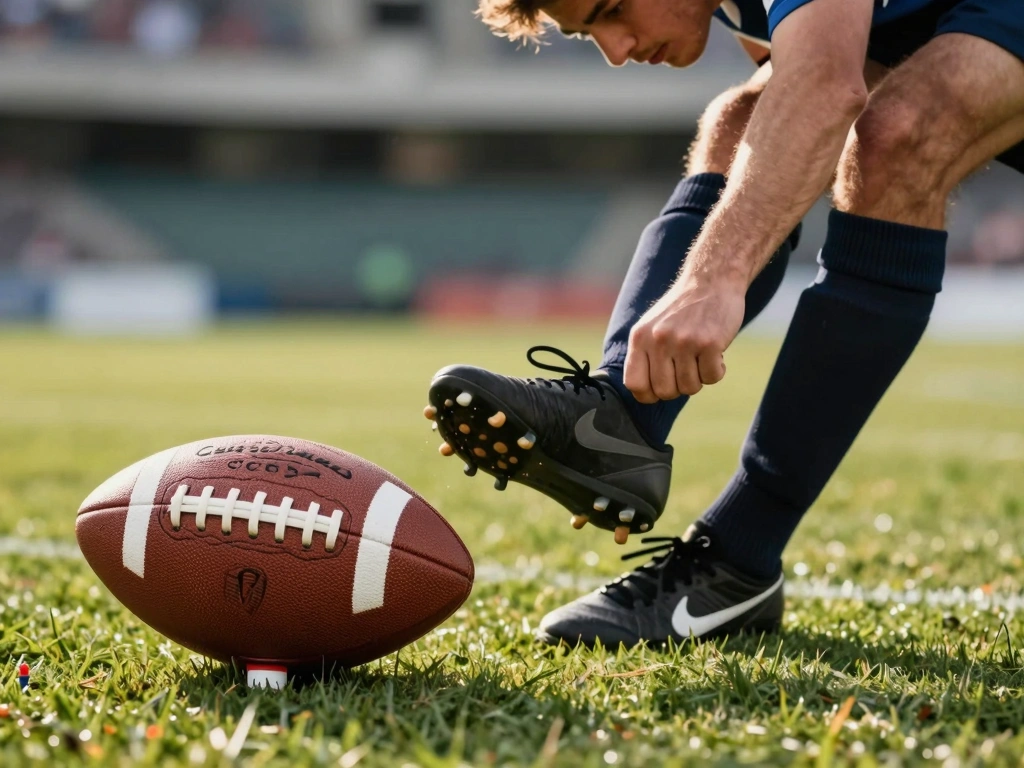
One of the most crucial skills that soccer players bring to football kicking is their ball striking technique. In soccer, players are trained to strike the ball with precision and power using different parts of their foot. NFL kickers utilize similar striking techniques, particularly when it comes to field goals and kickoffs. For instance, a soccer player learns to strike the ball with the laces of their boot, generating both lift and distance. This is comparable to a kicker making contact with the football at the sweet spot, ensuring that the ball travels accurately and with enough force.
The mechanics involved in kicking a soccer ball—planting the non-kicking foot, maintaining a stable body posture, and following through—are mirrored in football kicking. Studies have shown that NFL kickers who once played soccer often demonstrate superior ball-striking ability, as they can adapt their skills to the unique shape and weight of a football. For example, former soccer goalkeeper and current NFL kicker, Matt Prater, exemplifies how soccer influences the way a player approaches the ball, leading to powerful, accurate kicks.
Aiming and Precision
Aiming and precision are paramount in both soccer and football. Soccer players develop a keen sense of spatial awareness and target visualization, skills that are invaluable for kickers. In soccer, the ability to place a ball accurately into a net translates into a kicker's ability to aim for the uprights. The precision required to convert a penalty kick or free kick in soccer is akin to making a field goal in football.
Data from the NFL shows that kickers with soccer backgrounds often have a higher success rate on field goals compared to those without. For instance, during the 2020 NFL season, players like Justin Tucker and Younghoe Koo—both with soccer backgrounds—consistently ranked among the top kickers in accuracy. This connection between soccer aiming techniques and football reinforces the importance of precision in both sports.
Footwork and Balance
Footwork and balance are essential components of kicking in both soccer and football. Soccer training emphasizes footwork drills that enhance agility, coordination, and balance. These skills are critical for kickers, who must maintain stability as they prepare to strike the ball. Soccer players learn to control their bodies while executing complex movements, which translates to a kicker's ability to adjust their stance and approach based on the game situation.
For example, NFL kickers often use a specific approach angle to optimize their kicking technique. Soccer-derived footwork helps them adjust their steps and maintain balance, especially when facing challenging weather conditions or pressure situations. Studies have shown that improved footwork directly correlates to kicking accuracy, which further validates the soccer influence on football kickers.
The Importance of Leg Strength and Flexibility
Another significant factor contributing to the success of soccer players transitioning to NFL kickers is their leg strength and flexibility. The demands of soccer require athletes to develop robust lower body strength and flexibility, which are crucial for effective kicking in football.
Muscle Development in Soccer Players
Soccer players engage in a variety of exercises that promote muscle development, particularly in the legs. The nature of soccer involves sprinting, jumping, and striking the ball, all of which build strength in the quadriceps, hamstrings, and calves. This muscle development is directly applicable to kicking in football, where powerful leg muscles are required to drive the ball over long distances.
For instance, NFL kickers typically showcase exceptional leg strength, allowing them to achieve kick distances upwards of 60 yards. The conditioning programs of soccer players, which often include resistance training and plyometric exercises, lay a solid foundation for this strength. A notable example is Justin Tucker, whose impressive leg strength has enabled him to set multiple NFL records for field goal distance, including a 66-yard field goal in 2021.
Stretching Regimens in Soccer Training
Flexibility plays an equally important role in a kicker's performance. Soccer players routinely engage in stretching regimens to enhance their flexibility, which aids in preventing injuries and improving their range of motion. This flexibility is critical for kickers, as it allows them to achieve optimal kicking form and follow through effectively.
Many kickers incorporate dynamic stretching routines inspired by their soccer background to prepare their muscles before games. Techniques such as high-knees, leg swings, and hip openers not only warm up the muscles but also improve overall kicking performance. Research demonstrates that kickers who maintain higher levels of flexibility tend to have fewer injuries and superior performance metrics, further highlighting the connection between soccer training and football kicking.
Conditioning for Long-Distance Kicking
Conditioning for long-distance kicking is another aspect where soccer players excel. The endurance required in soccer translates well to the demands of kicking in football. Soccer players are accustomed to maintaining their energy levels throughout a match, which is critical for kickers during high-stakes moments in a game.
Training methods such as interval running, agility drills, and endurance circuits are prevalent in soccer. These workouts help build the stamina necessary for a kicker to perform consistently across four quarters. For instance, NFL kickers like Brett Maher have utilized soccer-inspired conditioning techniques to enhance their kicking endurance, enabling them to maintain accuracy and power throughout the game.
The Role of Mental Toughness and Focus
The mental aspect of kicking is just as important as the physical components. NFL kickers often face immense pressure, particularly in critical game situations. This mental toughness is a trait that many soccer players possess, honed through years of competing at high levels.
High-Pressure Situations in Soccer
Soccer players frequently find themselves in high-pressure scenarios, whether it's taking a penalty kick in the dying moments of a match or facing a crucial free kick. These experiences build a mental resilience that is invaluable for football kickers who must perform under similar pressure.
For example, in the 2014 FIFA World Cup, Brazilian soccer player Neymar faced significant pressure as he took a decisive penalty kick against Chile. His ability to remain calm and focused in a high-stakes situation mirrors the mindset required for NFL kickers during game-winning attempts. This mental preparation allows kickers to approach their kicks with confidence, knowing they have faced challenging situations before.
Concentration Techniques from Soccer
Soccer players often utilize concentration techniques such as visualization and deep breathing to enhance their focus during games. These techniques are equally beneficial for kickers in the NFL. Visualization, for instance, allows kickers to mentally rehearse their kicking process, envisioning a successful kick before stepping onto the field.
Many kickers, like Stephen Gostkowski, have spoken about the importance of mental preparation in their routine. They often incorporate mindfulness practices to remain centered and focused during games, demonstrating a direct connection between soccer training and football kicking performance.
Handling Failure and Recovery
Failure is an inevitable part of sports, and the ability to recover from mistakes is vital for success. Soccer players learn to cope with failure from a young age, dealing with missed opportunities and losses. This experience builds resilience, enabling them to bounce back quickly.
For NFL kickers, this resilience is crucial. A missed field goal can be devastating, but a kicker's ability to shake it off and focus on the next opportunity can determine their success in the league. The mental fortitude developed in soccer equips these athletes to handle pressure and recover from setbacks, which is a common theme among successful NFL kickers.
Coaching Influences and Training Backgrounds
Coaching influences and training backgrounds play a significant role in shaping kickers' skills. Many NFL kickers come from environments where soccer is emphasized, leading to a solid foundation in kicking techniques.
Soccer Coaches’ Impact on Kickers
Soccer coaches often prioritize technical skills and provide individualized training that can greatly benefit aspiring kickers. Coaches focus on developing a player's kicking mechanics, which translates easily into football. The attention to detail in soccer coaching creates kickers who understand the nuances of striking a ball effectively.
For example, NFL kicker Aldrick Rosas has credited his childhood soccer coaches with teaching him proper kicking techniques that he later adapted for football. This mentorship is crucial in developing the next generation of kickers who possess a strong soccer foundation.
Training Facilities and Resources
The availability of training facilities and resources also influences the development of kickers. Soccer clubs often provide access to advanced training equipment and facilities that foster skill development. Many NFL kickers have taken advantage of these resources during their youth, honing their skills before transitioning to football.
Training facilities that feature kicking-specific equipment, such as target nets and kicking pads, allow aspiring kickers to practice their technique extensively. For instance, the use of soccer-style goalposts for practice can help kickers visualize their targets more effectively.
Developmental Pathways from Soccer to Football
The developmental pathways that exist between soccer and football also facilitate the transition for many athletes. As youth soccer leagues become more popular, talented players often find themselves exploring different sports, including football. This diversification allows them to apply their soccer skills to kicking in football, giving them an edge over their peers.
Programs like the NFL's “Play Football” initiative encourage young athletes to participate in multiple sports, promoting the idea that skills acquired in one sport can benefit performance in another. This initiative has led to a surge in former soccer players successfully transitioning to the NFL as kickers.
Cultural and Societal Factors in Player Development
Cultural and societal factors also significantly influence the prevalence of soccer players becoming NFL kickers. The growing popularity of soccer in the U.S. has created an environment where athletes are encouraged to pursue multiple sports.
Popularity of Soccer in the U.S.
As soccer continues to gain traction in the United States, more athletes are exposed to the sport from a young age. Youth soccer leagues are thriving, providing a significant pool of talent that eventually crosses over into football. The increasing visibility of soccer through events like the FIFA World Cup has inspired a generation of athletes to engage in the sport.
This popularity leads to a greater number of skilled soccer players entering high school and college sports, where they may choose to try their hand at football. The cross-training benefits of soccer make this transition not only feasible but advantageous for many athletes.
Parental Support for Multi-Sport Athletes
Parental support plays a critical role in an athlete's development, particularly in encouraging multi-sport participation. Many parents recognize the benefits of their children engaging in various sports, understanding that skills developed in soccer can enhance performance in football. This support allows athletes to explore different athletic opportunities without the pressure of specializing too early.
For instance, the parents of NFL kicker Robbie Gould encouraged him to play soccer, which ultimately contributed to his success in football. This type of supportive environment fosters a culture of athleticism and versatility, leading to more soccer players transitioning to successful kicking careers in the NFL.
Career Opportunities in Soccer vs. Football
The perception of career opportunities in soccer compared to football also influences player development. With the NFL offering lucrative contracts and visibility, many soccer players consider making the switch to football as a viable career path. As soccer continues to grow, the potential for a successful career in either sport is becoming more apparent.
This shift in perception encourages athletes to pursue football, particularly as they recognize the potential for success in kicking positions. The ability to convert soccer skills into a lucrative football career is a significant motivator for many young athletes.
In conclusion, the connection between soccer and NFL kicking is multifaceted, encompassing technical skills, physical conditioning, mental toughness, coaching influences, and cultural factors. As soccer continues to thrive in the U.S., it is likely that we will see an increasing number of kickers with soccer roots making their mark in the NFL.